
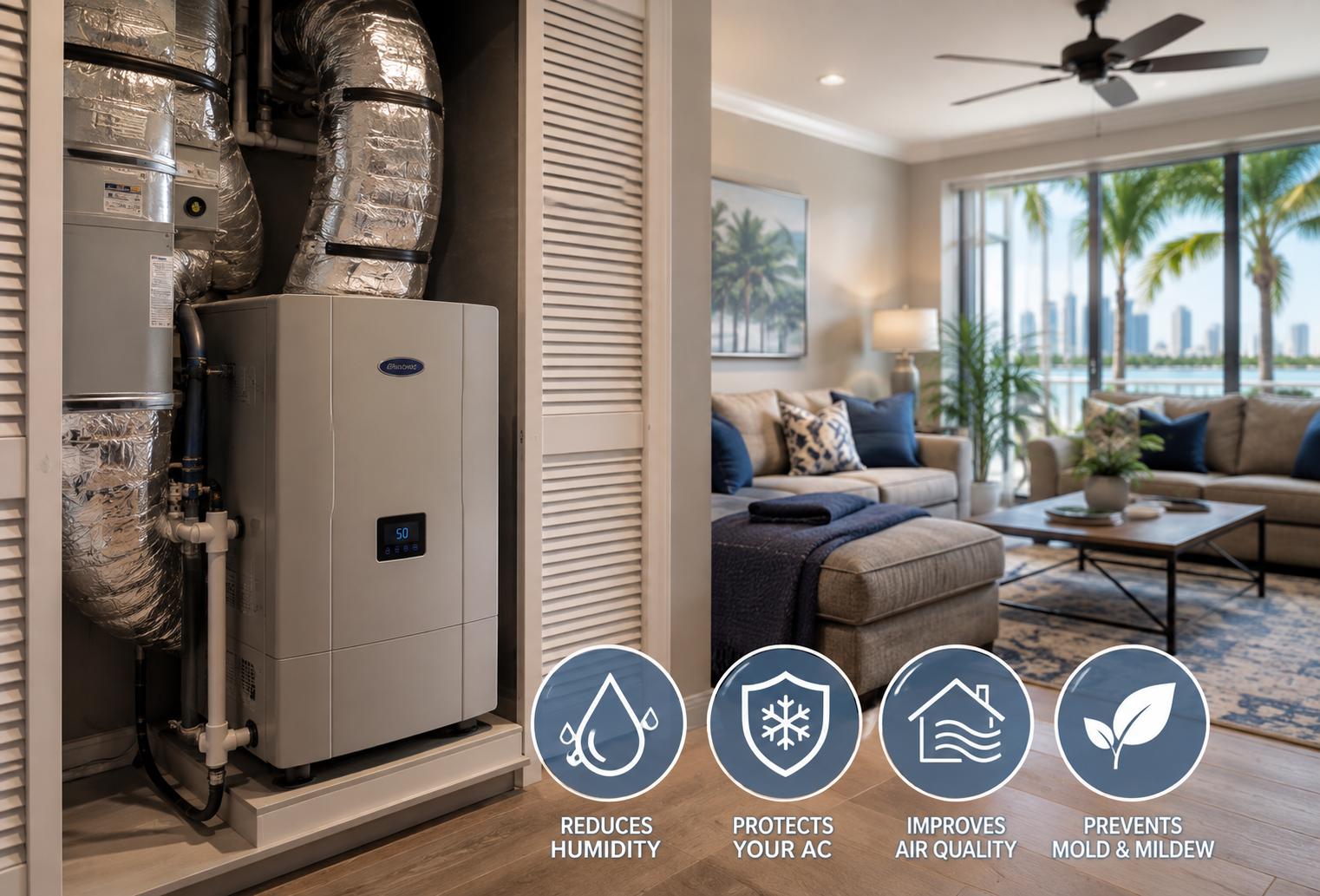
Combating Tampa’s Summer Humidity: How Whole-Home Dehumidifiers Protect Your AC and Air Quality
Summer in the Tampa area brings more than soaring temperatures. High humidity can make your home feel sticky, force your air conditioner to work harder, and create conditions that affect indoor air quality. For homeowners across Tampa, Carrollwood, Westchase, South Tampa, Brandon, and nearby Hillsborough County communities, managing moisture is just as important as cooling your home.
Quick Answer
A whole-home dehumidifier helps control excess indoor moisture by removing humidity throughout your home’s air distribution system. During Tampa’s long humid season, it can improve comfort, reduce strain on your air conditioner, support healthier indoor air quality, and help protect your home from moisture-related problems.
What Local Readers Should Know
Tampa’s high outdoor humidity often keeps indoor moisture levels elevated, even when your air conditioner is running.
A whole-home dehumidifier works alongside your HVAC system to maintain more balanced indoor humidity.
Proper humidity control can help reduce musty odors and create a more comfortable indoor environment.
Homes near Tampa Bay and throughout Hillsborough County often experience higher humidity because of the region’s subtropical climate.
Keeping indoor humidity at recommended levels may help your air conditioning system operate more efficiently during Florida’s hottest months.
Why This Matters Locally
Controlling indoor humidity is especially important in Tampa because summer weather often combines intense heat with consistently high moisture levels. Afternoon thunderstorms, coastal air, and long cooling seasons all contribute to elevated humidity inside local homes.
Many neighborhoods throughout South Tampa, New Tampa, Seminole Heights, and nearby communities feature homes that remain air conditioned for much of the year. While central air conditioning removes some moisture during normal operation, extremely humid weather can leave indoor humidity higher than many homeowners expect.
At Kenny’s Air Conditioning & Heating Services, Inc., we regularly help homeowners understand how humidity affects comfort, HVAC performance, and indoor air quality.
Local Data and Field Observations
Florida’s climate is well known for its high humidity, particularly during the summer rainy season. The National Weather Service regularly reports conditions that combine warm temperatures with elevated moisture levels across the Tampa Bay region.
From our field observations, many homeowners notice increased humidity after extended periods of rain or during stretches when afternoon thunderstorms occur almost daily. Even newer homes with efficient air conditioning systems may benefit from additional humidity control if indoor moisture remains consistently high.
Local Impact
A humid home often feels warmer than the thermostat setting suggests. As a result, homeowners sometimes lower the temperature to compensate, causing the air conditioner to run longer without fully addressing excess moisture.
High indoor humidity may also contribute to:
Sticky or clammy indoor conditions
Condensation on windows
Persistent musty odors
Increased workload on HVAC equipment
Reduced overall comfort throughout the home
For many Tampa homeowners, solving the humidity problem improves comfort without simply lowering the thermostat.
Warning Signs Your Home May Need Better Humidity Control
A whole-home dehumidifier may be worth considering if you notice several of these warning signs:
Rooms feel damp even with the AC running.
Windows frequently develop condensation.
Musty smells linger in certain areas of the house.
Bedding or furniture feels slightly damp.
You constantly lower the thermostat but still feel uncomfortable.
Mold or mildew appears in moisture-prone areas.
Basement, garage, or storage spaces remain noticeably humid.
Family members notice worsening indoor air quality concerns during humid months.
When to Call a Professional
Persistent indoor humidity deserves professional evaluation when it continues despite normal air conditioner operation. While homeowners can monitor humidity using an inexpensive indoor hygrometer, determining whether the issue involves equipment sizing, airflow, drainage, or humidity control typically requires an HVAC inspection.
We recommend scheduling professional service if humidity remains consistently high, your AC runs continuously without improving comfort, or you notice recurring moisture-related issues inside your home.
Common Local Causes of High Indoor Humidity
Several local conditions commonly contribute to excess indoor moisture in the Tampa area.
1. Florida’s Naturally Humid Climate
Outdoor air entering the home naturally contains significant moisture for much of the year.
2. Frequent Summer Rainfall
Regular afternoon storms increase outdoor humidity, making it harder for homes to dry naturally.
3. Long Cooling Seasons
Because air conditioners operate for extended periods, proper moisture management becomes increasingly important for long-term system performance.
4. Air Leakage
Warm, humid outdoor air entering through gaps around windows, doors, attics, or ductwork can continually introduce additional moisture.
5. Oversized Air Conditioning Systems
Some systems cool the home quickly without running long enough to remove sufficient moisture from the air.
Prevention and Maintenance
Managing indoor humidity starts with regular HVAC maintenance and good airflow throughout the home.
Helpful steps include:
Replace air filters according to manufacturer recommendations.
Schedule seasonal HVAC maintenance before peak cooling season.
Keep supply and return vents unobstructed.
Seal obvious air leaks around doors and windows.
Use bathroom and kitchen exhaust fans during moisture-producing activities.
Consider whole-home humidity control if indoor moisture remains elevated despite routine maintenance.
While homeowners can perform basic maintenance, installation and sizing of whole-home dehumidifiers should be handled by qualified HVAC professionals.
Expected Results
A properly selected whole-home dehumidifier can provide several noticeable benefits.
Homeowners often experience:
Improved indoor comfort
Less sticky indoor air
Reduced reliance on lowering thermostat settings
Better humidity balance throughout the home
Support for healthier indoor air quality
Reduced workload on the air conditioning system during humid weather
Actual results depend on home size, existing HVAC equipment, insulation, air leakage, and overall system condition.
Common Mistakes
Mistake: Lowering the Thermostat Instead of Addressing Humidity
Consequence: The air conditioner runs longer while indoor moisture may remain too high.
Better Approach: Evaluate whether additional humidity control would address the root cause.
Mistake: Ignoring Musty Odors
Consequence: Persistent moisture problems may continue unnoticed.
Better Approach: Have your HVAC system and indoor humidity professionally evaluated.
Mistake: Skipping Preventive Maintenance
Consequence: Reduced system efficiency and missed opportunities to identify humidity-related issues.
Better Approach: Schedule routine maintenance before Tampa’s hottest months arrive.
Common Local Scenario
A homeowner in Westchase notices that the house feels sticky every afternoon despite the thermostat reading 74 degrees. The air conditioner runs frequently, yet bedrooms remain uncomfortable and mild condensation appears on some windows after several days of summer rain. After evaluating the HVAC system and indoor humidity levels, a whole-home dehumidifier becomes one option for improving comfort while reducing unnecessary strain on the cooling system.
Related Service Solutions
Whole-home dehumidifiers work best as part of a complete indoor comfort strategy. Depending on your home’s needs, recommended services may include:
Air conditioning maintenance
HVAC system inspections
Indoor air quality evaluations
Whole-home dehumidifier installation
Air filtration improvements
HVAC system replacement when existing equipment no longer performs efficiently
Comparing Your Options
| Option | Advantages | Considerations |
|---|---|---|
| Portable dehumidifier | Lower initial cost | Covers limited areas and requires regular emptying |
| Whole-home dehumidifier | Treats humidity throughout the home with integrated operation | Professional installation required |
| Lowering thermostat | Temporary cooling sensation | May increase energy use without solving humidity issues |
| Professional humidity evaluation | Identifies underlying causes | Helps determine the most appropriate long-term solution |
Service Areas
We proudly serve homeowners throughout Tampa and surrounding communities, including Brandon, Carrollwood, Westchase, Riverview, Temple Terrace, and other nearby areas across Hillsborough County. Understanding local weather patterns helps us recommend humidity solutions that fit the unique challenges of Florida homes.
Cost of Ignoring the Issue
Ignoring high indoor humidity can lead to ongoing discomfort, increased cooling demands, and moisture-related problems that become more difficult to address over time. Taking action early may help improve comfort while supporting your HVAC system’s long-term performance.
Frequently Asked Questions
Does every Tampa home need a whole-home dehumidifier?
Not every home requires one. Homes experiencing consistently high indoor humidity, comfort issues, or persistent moisture concerns may benefit from professional evaluation to determine whether additional humidity control is appropriate.
What indoor humidity level is generally recommended?
Most experts recommend maintaining indoor humidity between approximately 30% and 50%, although seasonal conditions and personal comfort preferences may vary.
Will a whole-home dehumidifier help my air conditioner in Tampa?
Yes. A whole-home dehumidifier can reduce excess moisture, allowing your air conditioner to focus more on cooling while helping improve overall indoor comfort.
Can high humidity affect indoor air quality?
Yes. Excess moisture can contribute to musty odors and create conditions that may negatively affect indoor air quality if left unmanaged.
Are newer homes in Hillsborough County immune to humidity problems?
No. Even well-insulated newer homes can experience elevated indoor humidity due to Florida’s climate, occupant activities, and ventilation patterns.
How do I know if my AC is removing enough humidity?
If your home feels damp, sticky, or uncomfortable despite normal cooling, or if condensation and musty odors become common, it’s worth having your system professionally evaluated.
Is a portable dehumidifier enough for larger homes?
Portable units may work well for individual rooms, but whole-home systems provide more consistent humidity control throughout the entire house.
When should homeowners schedule a humidity inspection in Tampa?
Scheduling an inspection before or early in the summer cooling season allows potential humidity issues to be identified before prolonged heat and moisture place additional demands on your HVAC system.
Combating Humidity Starts With the Right Indoor Comfort Strategy
Managing humidity is an important part of staying comfortable during Tampa’s long cooling season. By addressing excess moisture instead of simply lowering the thermostat, homeowners can create a more comfortable indoor environment while supporting the performance of their HVAC system.
Ready to Improve Comfort Throughout Your Home?
Our team is here to help you evaluate your indoor humidity and recommend practical solutions that fit your home’s needs.
Categorised in: Dehumidifiers